The missing part is where to start
Any honest care guide for this label opens on an absence. Nowhere does That’s A Awful Lot Of Cough Syrup post any washing or care instructions: not on the product pages, not in a care section and not in a policy page. No overall reference document exists to fall back on, since its two size-chart pages black alocs tee render without any chart or care content at all. The FAQ does exist, but it handles payments, shipping and refunds, and stops there. No such instruction has been given by the brand, so nothing below can be presented as the brand’s instruction. The fabric weights and constructions the brand does publish are what the general garment-care practice below is written for, and it is kept clearly separated from the handful of things the brand actually states.
What the brand does publish, fabric by fabric
The silence on care is the more noticeable for specifications that go into this much detail about weight and composition. At the brand’s own store as of September 2026 the classic tees are published as 6.5 oz, 100 percent organic cotton in a relaxed fit, about $150. 16 oz organic cotton, hand-dyed and printed in Los Angeles, is the Classic Cough Syrup Hoodie, at about $200 on the same date, and prices do change. The classic sweatpants come as a 14 oz fleece published at 80 percent cotton and 20 percent recycled polyester. Garment-dyed by what the brand calls a double dye process to mimic sun-fading, the Double Cup Cargo Shorts are published as 14 oz denim. The signature yellow woven label goes on the garments, while the Dickies pieces are published as a 65/35 cotton-polyester blend.
The organic cotton jersey
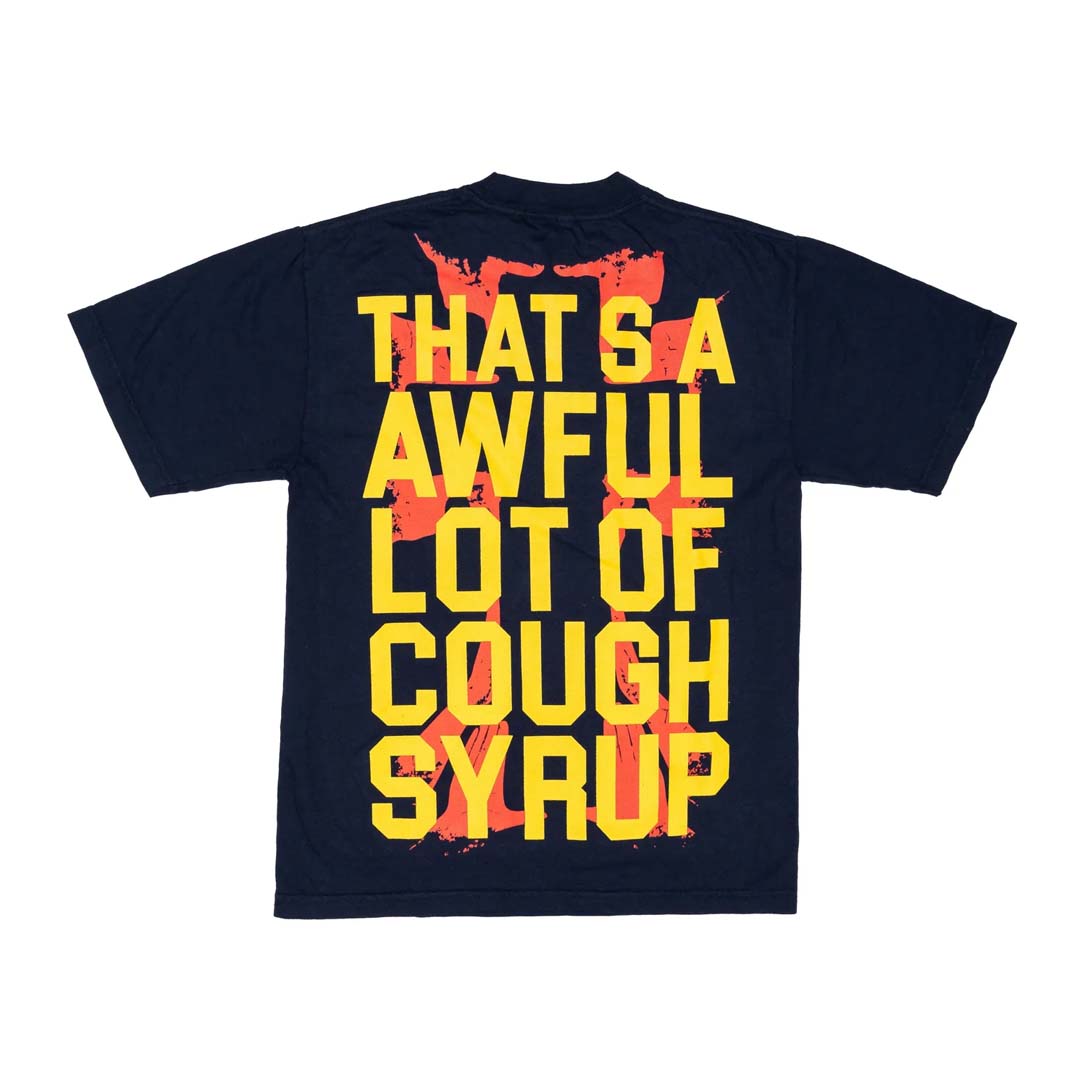
This is the cloth behind most cough syrup clothing you are likely to own, and it is the best documented. The brand gives the composition, 100 percent organic cotton, the weight, 6.5 oz, a relaxed cut and jumbo screen prints front and back. Described as cotton jersey that has been rinsed for a vintage feel, some lighter styles have already been through water before they reached you. Wash temperature, cycle, drying and ironing: nothing is said by the brand about any of it. A mid-weight cotton jersey with a large print is, as general practice, washed cool and inside out, dried gently, and kept away from direct heat at the print. That is standard handling for that fabric and construction, and not something the label has told anyone to do.
Heavyweight cotton, and fleece
Over at the heavy end two garments sit. The awful lot of cough syrup hoodie in the classic cut is published as 16 oz organic cotton, hand-dyed and printed in Los Angeles, which is unusually heavy for a hood. At 80 percent cotton and 20 percent recycled polyester, the sweatpants are a 14 oz fleece, with the logo screen printed across the front and up the back legs. Neither comes with a published wash instruction, a shrinkage note or a drying recommendation. A cool wash, a gentle cycle to protect the loft, and drying flat or on low heat is general practice for heavy cotton fleece, because dense fabrics take their shape from how they dry. More caution still is what a hand-dyed piece would ordinarily warrant, meaning cold water and separate washing while colour settles, but the brand specifies none of it.
The raw and dyed denim
The denim is the most interesting case and the least documented. About the Double Cup Cargo Shorts the brand publishes the weight, 14 oz, the finish, garment-dyed by a double dye process meant to mimic sun-fading, and a custom leather patch. Raw or pre-washed, whether it will shrink, whether the dye will transfer to lighter fabrics or upholstery: on none of that does the brand publish anything. There is no answer on the site to that last question, which matters with any garment-dyed indigo or overdyed piece. With heavy dyed denim, general practice is to wash rarely, inside out, in cold water with like colours, and to air-dry rather than machine-dry. Again, that is how heavy dyed denim is normally handled, not an instruction from the brand.
Cotton-poly workwear pieces
Polyester content is why the Dickies line behaves differently from everything else here. The classic workwear ratio, and the most forgiving fabric here, is the published blend of 65 percent cotton and 35 percent polyester across the work shirt and the lined jacket. Such blends are more stable than pure cotton, less prone to shrinking and quicker to dry, which is why workwear has used them for decades. The blend and the construction are published, down to the pencil pocket on the jacket sleeve, yet no care guidance whatsoever. A warm or cool machine wash and a low drying heat is general practice for a 65/35 shirt, since high heat is harder on polyester than on cotton. Lined outerwear is often handled professionally rather than at home, which makes a fully lined jacket a different proposition.
Screen-printed graphics, screen printed
They are the reason most people bought the garment, so the prints deserve separate treatment. In its own copy the brand describes jumbo screen prints at front and back, artwork screen-printed in Los Angeles, and water-based screen printing on some of the lighter tees. The brand does not label which pieces use which, although water-based inks sit into the fabric rather than on top of it and feel softer, while thicker prints sit on the surface. Nothing at all is published about whether a print should be washed inside out, ironed over or tumble dried. General practice for a large screen print is to turn the garment inside out, keep the water cool, skip the dryer where possible, and never press a hot iron onto the print. Heat is the one variable you control entirely, and cracked or faded artwork is its usual outcome.
The things nobody writes down, and storage
The physics are the same for everyone, so storage is where the absence of published guidance matters least. Heavy knits do badly on hangers: a 16 oz hoodie or a 14 oz fleece can stretch its own shoulders over months, so folding is the usual recommendation. Hanging suits lighter tees fine, though a crowded rail creases prints along fold lines that can become permanent. Denim is happiest folded or hung by the waistband, away from direct sunlight, since light will fade a dyed finish unevenly. Damp is the real enemy across all of it, and nothing about alocs clothing alters that. Brand guidance this is not; it is ordinary practice for those weights, and it is worth saying plainly because the brand says nothing.
A single table for the whole picture
What the table does is keep apart the two categories that matter here. What the brand actually publishes sits in one column, and it is a useful set of facts about weight and composition. Another carries general practice for that fabric, drawn from how such fabrics are normally handled and not from the label. Knowing what has not been answered is as useful as knowing what has, which is why the last column names the gap. Type thats a awful lot of cough syrup looking for a wash symbol and the same emptiness described here is what comes back. Somebody’s reconstruction, not a published document, is what any care chart attributed to this brand elsewhere amounts to.
| The fabric | What the brand does publish | General practice for that fabric | What the brand never states |
|---|---|---|---|
| The organic cotton jersey | 6.5 oz organic cotton, a relaxed fit, jumbo prints | Cool wash, turned inside out, gentle drying | Temperature, cycle, shrinkage, ironing |
| Heavy cotton, and fleece | A 16 oz cotton hoodie, hand-dyed; a 14 oz 80/20 fleece | Cool gentle wash, then dry flat or on low heat | Anything on hand-dye colour settling |
| The denim | 14 oz, garment-dyed, and a leather patch | Wash rarely, cold, inside out, air-dry | Raw or pre-washed, plus shrinkage and dye transfer |
| Cotton-poly workwear | 65 percent cotton, 35 percent polyester | A warm or cool wash, low drying heat | Care of the lined jacket |
| The screen-printed graphics | Screen-printed in Los Angeles, some water-based ink | Inside out, cool water, and no direct iron | Ink type per garment and heat tolerance |
The gap, and living with it
This is not an argument against the clothes, not one line of it. The published specifications are better than many labels bother with, and a 16 oz hoodie and 14 oz denim are substantial garments. Specification is one document and care is another, and only the first of them exists here, which is the whole of the gap. The brand’s own store and its locations in Los Angeles and Houston are where to ask if a definitive answer matters, and that answer beats anything inferred from a fabric weight. Until then the sensible position on any awful lot of cough syrup piece is caution: cool water, low heat, inside out, plus patience with a garment hand-dyed and screen-printed rather than mass-finished. It is general practice speaking, and it should be read that way.